Article: Shooting Vest or Shooting Jacket? When to Wear What
Shooting Vest or Shooting Jacket? When to Wear What
At some point, every clay shooter faces the same question. Vest or jacket? Both exist for the same basic purpose, to carry your cartridges, protect your shoulder and give your gun a reliable surface to mount against. But they do these things differently, and the right choice depends on how you shoot, where you shoot and what time of year it is.
This isn't about one being better than the other. It's about understanding what each one does well so you can pick the right tool for the conditions.
The Case for a Shooting Vest
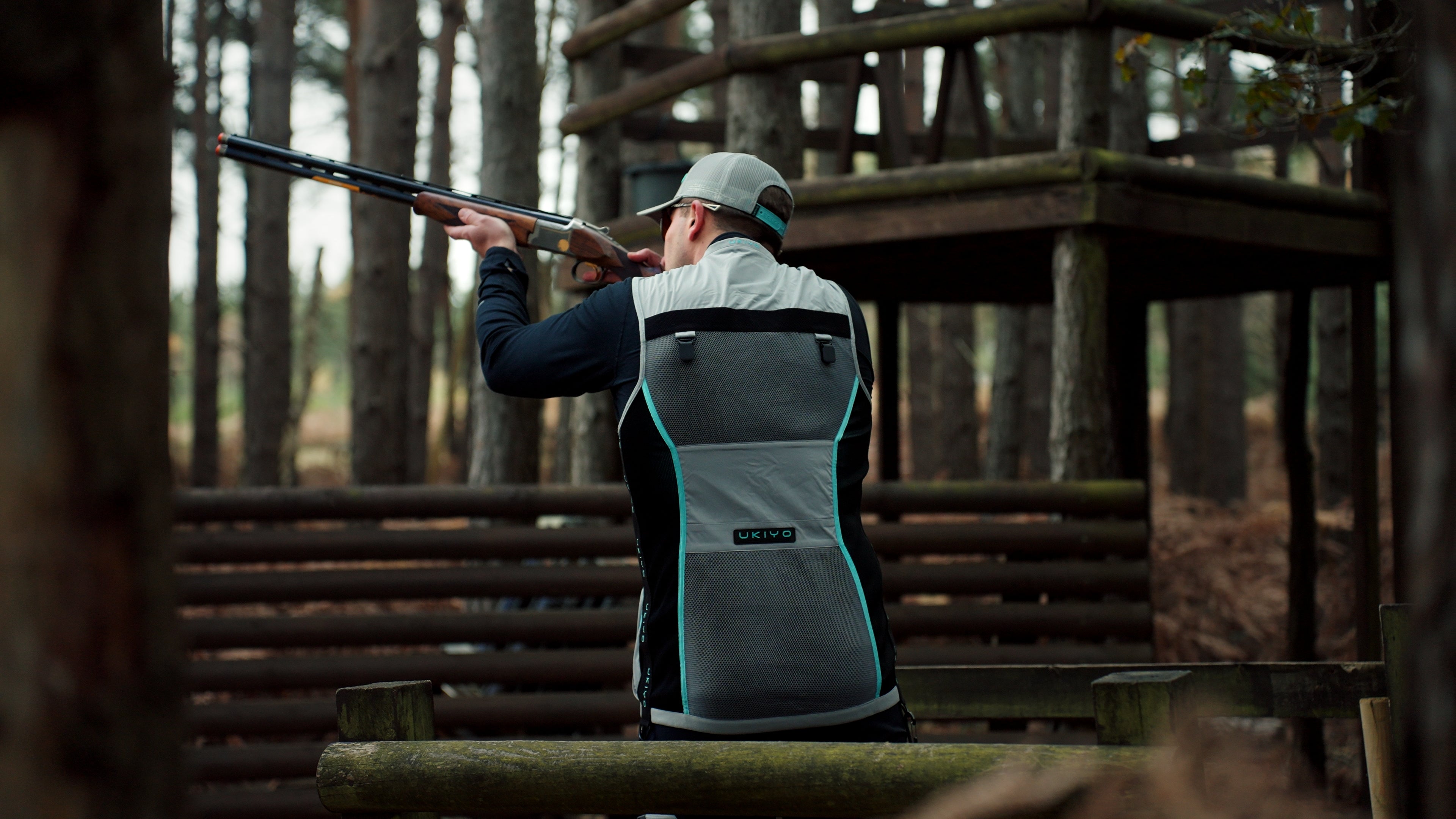
A shooting vest gives you maximum freedom of movement. There's no fabric around your arms to restrict your swing, no sleeves to catch or bunch at the elbow, and less material overall to interfere with a clean gun mount.
For disciplines where you need to turn, track and react quickly, this matters. Sporting clays in particular demand a wide range of motion because targets come from unpredictable angles. A vest lets you rotate through the torso without fighting against the resistance of a full jacket.
Weight is another factor. A vest is lighter, which sounds trivial until you're walking a 15-stand sporting course in warm weather. Less material means less heat retention, and technical vests with 3D mesh construction actively promote airflow across the back and sides. You arrive at each stand cooler and more focused.
From a gun mount perspective, a vest also tends to offer a cleaner shoulder pocket. With no sleeve seam running across the shoulder, there's one less layer between the butt pad and your body. That translates to a more consistent mount, stand after stand.
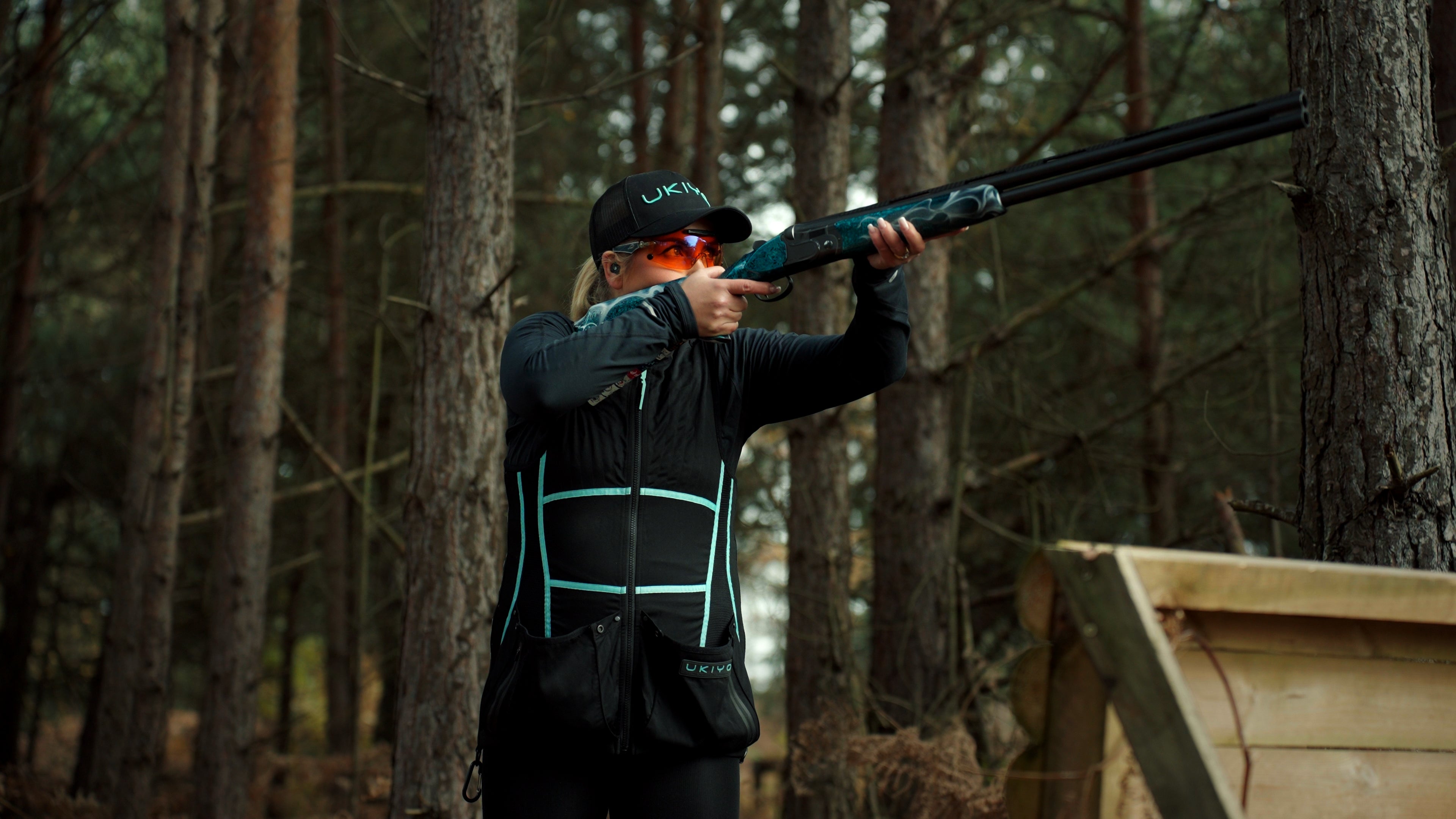
The UKIYO Men's Inception Vest and Women's Inception Vest are built around this principle. Lightweight technical fabric, elasticated ribbed side panels for unrestricted rotation, and a clean shoulder construction that stays out of the way of the mount.
The Case for a Shooting Jacket
Jackets earn their place when the weather turns. In November rain or a February frost, a vest alone won't keep you warm enough to shoot well. Cold muscles are tight muscles, and that affects your swing, your timing and your concentration.
A quality shooting jacket provides insulation, weather protection and full arm coverage while still offering the key features you need for shooting. The better ones use articulated sleeves and stretch panels to maintain as much mobility as possible, though even the best jacket can't match a vest for pure freedom of movement.
Jackets also work well for game shooting where you're standing at a peg for extended periods, often in exposed conditions. The warmth and wind protection become genuine performance factors when you're standing still in a field for three hours waiting for drives.
For walked-up shooting, the extra protection from hedgerows, branches and brambles is a practical benefit that vests simply can't offer.
When to Wear Each
Wear a vest when temperatures are mild to warm, when you're shooting sporting clays or any discipline that demands full range of movement, when you're competing and want the most consistent gun mount possible, and when you're walking a long course and want to stay light and cool.
Wear a jacket when temperatures drop below the point where layering under a vest is enough, when you're shooting in rain or strong wind, when you're standing at a game peg for long periods, or when you're walking through cover that would scratch or snag bare arms.
The layering middle ground. Many experienced shooters use a vest over a good base layer and mid-layer as their primary setup for most of the year. This gives them the mobility of a vest with the warmth of layered clothing. A vest with elasticated side panels accommodates this approach well, stretching to fit over layers without becoming baggy on warmer days.
Can you wear a shooting vest in winter?
The Practical Reality
Most regular shooters end up owning both. The vest gets worn from March through October and becomes the go-to for competition shooting year-round. The jacket comes out for the coldest months and for game days. If you're buying your first piece of purpose-built shooting clothing, a vest gives you more usable months in the year and more versatility across disciplines.
If you already own a decent jacket and are looking at adding a vest, the difference in your shooting will be noticeable almost immediately. The improved mount, the freedom through the swing, and the reduced fatigue on longer days all add up. It's one of those kit upgrades where the benefit is immediate rather than theoretical.
Is a vest or jacket better for beginners?
What About Gilets and Waistcoats?
In the UK shooting world, you'll hear "vest," "gilet" and "waistcoat" used almost interchangeably. Technically they all describe a sleeveless upper body garment, but in practice the terminology signals the type. "Shooting vest" usually refers to a purpose-built garment with cartridge pockets, recoil protection and technical construction. "Gilet" tends to describe a more fashion-oriented or general outdoor layer. "Waistcoat" is the traditional term and can mean either, depending on context.
When searching for shooting-specific garments, "shooting vest" will return the most relevant results. But don't be put off if a product is labelled differently. The features and construction matter far more than the name on the label.