How to Choose a Shooting Vest That Actually Fits Your Shooting
A shooting vest is one of the few pieces of kit that directly affects how you shoot. It sits between your body and your gun, and if it doesn't work with your stance, your mount and your movement, you'll feel it in your scores before you notice it anywhere else.
We'll break down what actually matters when choosing a vest for clay, trap or sporting disciplines, so you can make a decision based on your shooting rather than someone else's sales targets.
Why Your Shooting Vest Matters More Than You Think
A vest does three things. It gives your gun a consistent surface to mount against. It carries your cartridges where you need them. And it protects your shoulder from recoil over a long day of shooting.
Get any of those wrong and it compounds. A vest that bunches at the shoulder changes your mount. Pockets in the wrong position slow your reload. Inadequate recoil management means you start flinching by the third stand. None of these problems are dramatic on their own, but they stack up across a day of competition or practice.
Fit Is Everything
A shooting vest should sit flat across your chest and shoulders without pulling, riding up or bunching when you bring your gun into the mount position. That sounds simple, but it rules out more vests than you'd expect.
The shoulder area is the most critical point. When you mount your gun, the butt pad needs to find the same spot in your shoulder pocket every single time. If the vest material is too thick, too stiff or too loose, it creates inconsistency. You end up adjusting to your clothing rather than focusing on the target.
Side panels matter more than most people realise. Elasticated or ribbed side panels allow the vest to move with your body as you swing and turn, rather than restricting your rotation. This is particularly important in sporting disciplines where targets come from unpredictable angles and you need full range of movement.
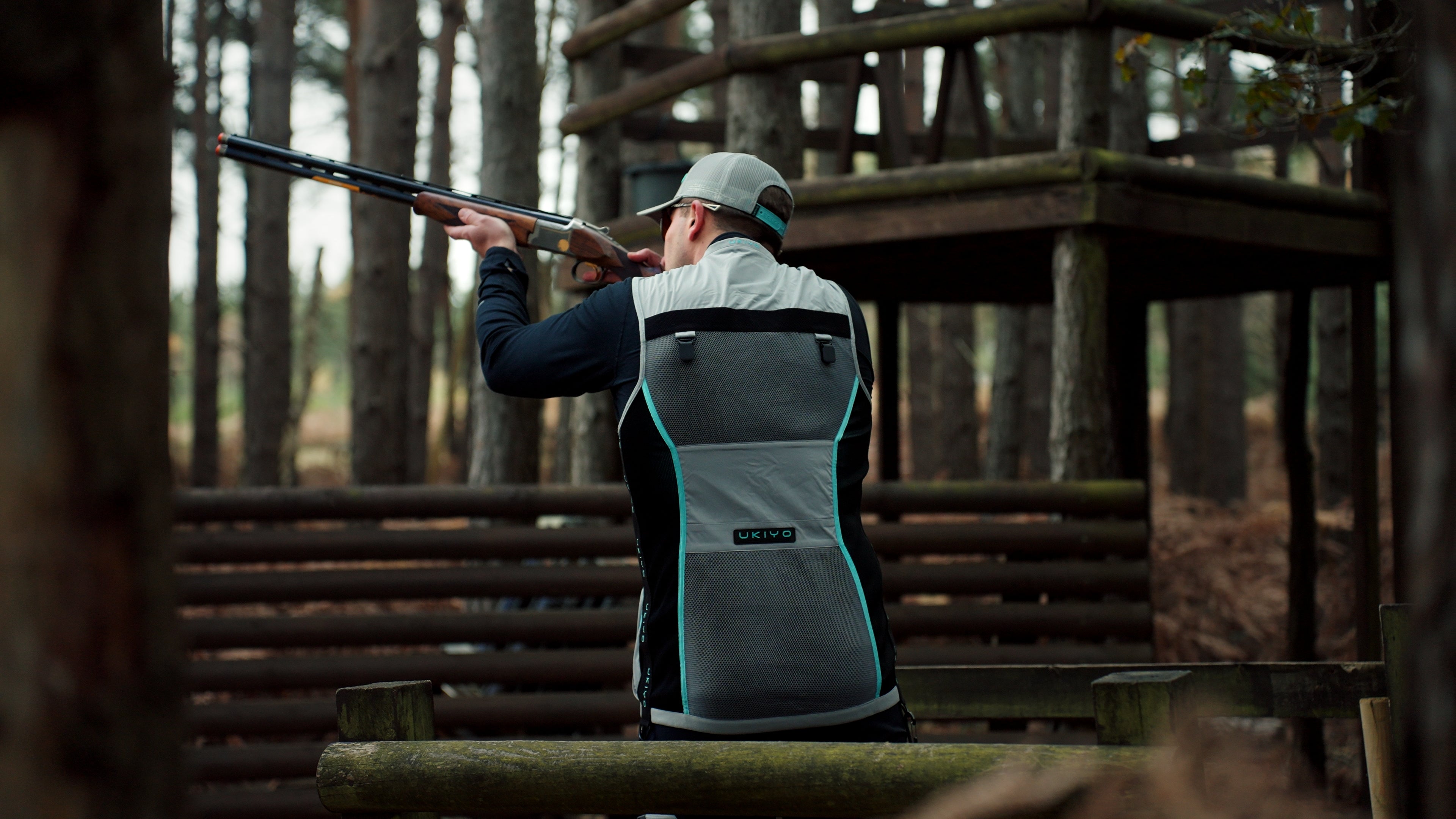
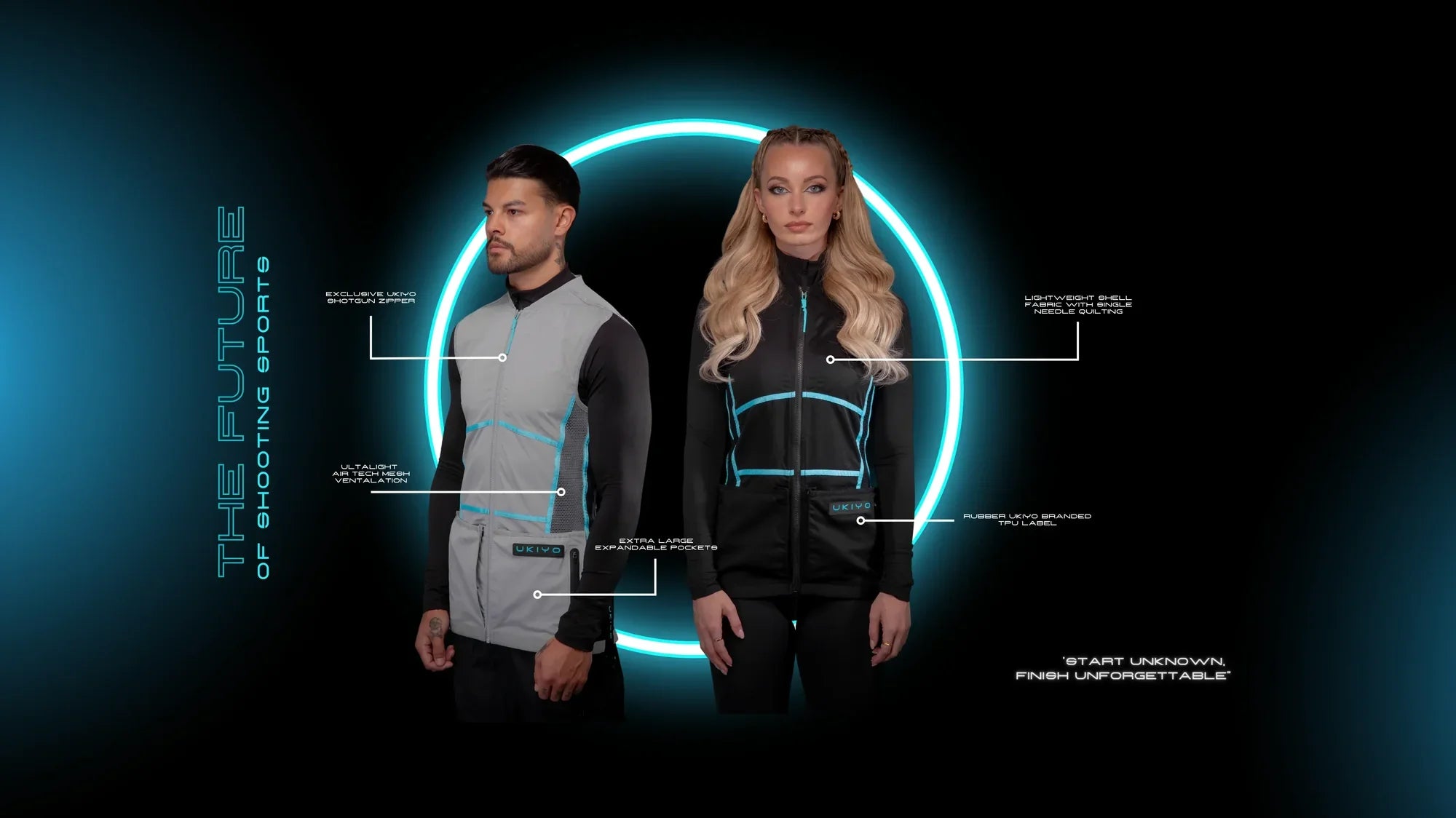
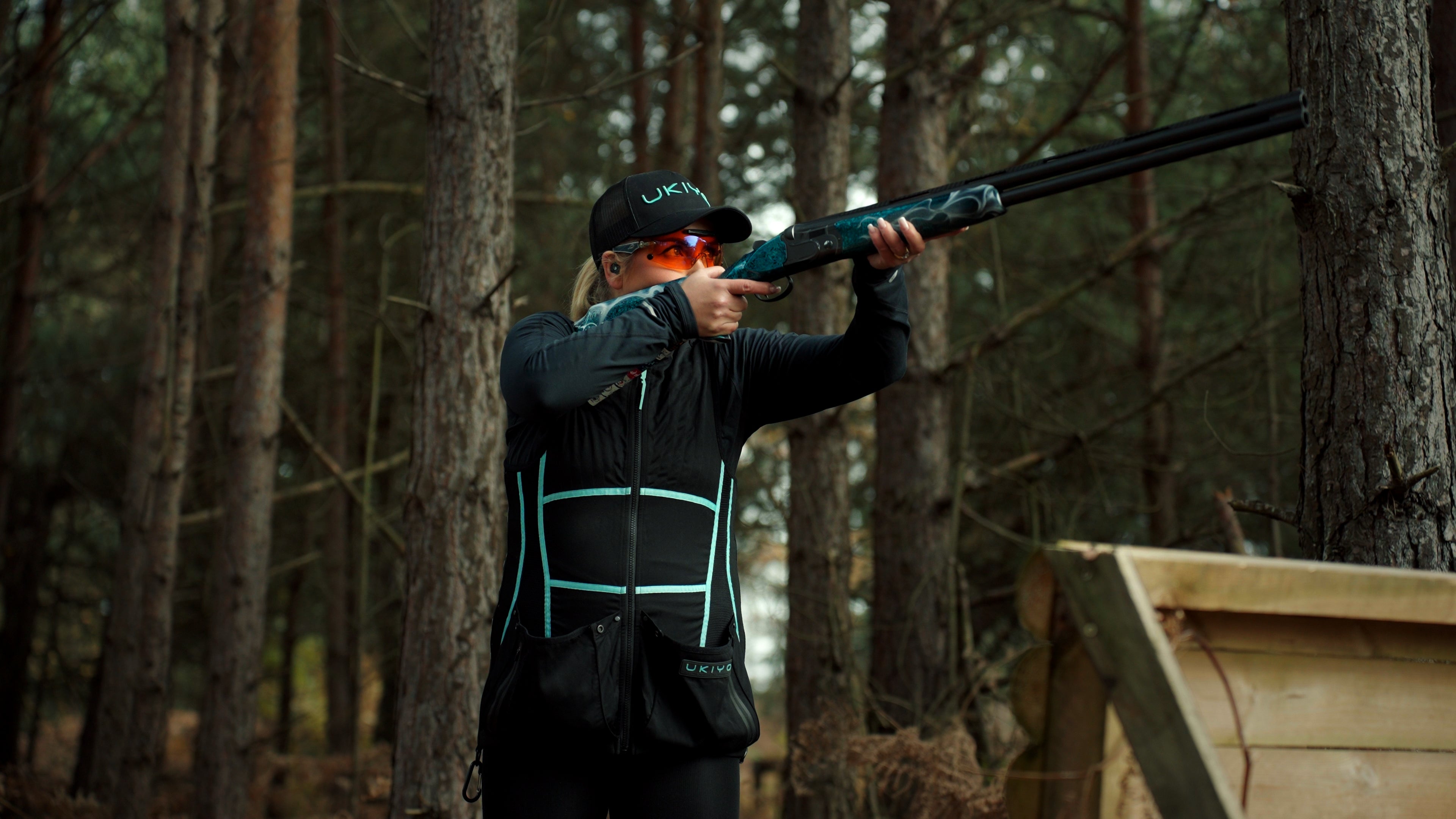
If you're someone who shoots year-round, think about layering. A vest that fits perfectly over a t-shirt in July might not work over a base layer and mid-layer in December. Look for a cut that accommodates seasonal layering without becoming baggy when worn light. The Women's Inception Shooting Vest and Men's Inception Shooting Vest from UKIYO use elasticated ribbed side panels specifically to handle this, stretching to accommodate layers without losing shape when worn on their own.
Materials and Construction
Shooting vests broadly fall into three material categories, and each has trade-offs.
Cotton and canvas are traditional choices. They're durable and have a familiar feel, but they absorb moisture, take a long time to dry and get heavier as the day goes on. In British weather, that's a genuine problem.
Mesh vests are popular for warm-weather shooting and summer competitions. They're light and breathable, but they tend to offer less structure and can feel flimsy on the shoulder, which affects gun mount consistency.
Technical fabrics are the modern solution. Lightweight, moisture-wicking and quick-drying, they maintain their structure and weight regardless of conditions. The best technical vests combine a 3D mesh construction for airflow with reinforced panels where you need durability. This is the direction the market has moved in, and for good reason. A technical vest performs the same whether it's your first stand or your last, in April drizzle or August heat.
Pockets and Cartridge Management
Pocket design is one of those things that seems minor until you're fumbling for cartridges while the ref is calling "ready." Every shooting vest should have large front pockets positioned where your hands naturally fall, deep enough to hold a full box of cartridges without spilling and shaped so you can grab two shells without looking down.
Double-layered pockets are worth looking for. They last longer under the constant abrasion of cartridge brass and they maintain their shape better over time. Thin, single-layer pockets start to sag and stretch after a season, which changes where your hands need to go to reach your cartridges.
Some vests include a rear pocket or pouch for spent cartridges. This is useful for ground management on shoots that require you to collect your empties, but it's not essential for everyone.
Recoil Protection
Most modern shooting vests include either a built-in recoil pad or a pocket designed to accept a removable one. The question isn't whether you need recoil protection, but how much and what type.
If you're shooting 50 to 100 cartridges in a session, the padding built into most quality vests will be sufficient. For competition shooters regularly putting 150 or more through in a day, a removable pad with higher-density foam or a material like D3O (which hardens on impact) makes a noticeable difference by the end of the day.
The positioning of the recoil pad matters as much as the material. It needs to sit where the butt of your gun actually makes contact, which varies depending on your build and your gun fit. A pad that's too high or too low is doing nothing useful.
Multi-Handed Design
If you shoot with both hands or share kit with someone who shoots from the opposite shoulder, a multi-handed vest saves you from needing two separate vests. The Men's Inception Vest in Grey features a multi-handed design, meaning the recoil pad and shoulder construction work equally well for left and right-handed shooters. It's a small detail that makes a big practical difference for households with multiple shooters or for anyone who occasionally switches.
What to Look for by Discipline
Sporting clays. This demands the most from a vest because targets come from every angle. You need full range of movement, especially through the torso and shoulders. Lightweight construction and elasticated panels are more important here than in any other discipline. Sporting rounds also tend to be longer walks between stands, so breathability and weight become factors over a full course.
Trap. Trap shooting is more repetitive and front-facing, so the vest's shoulder construction and recoil management take priority. You'll mount and fire in a similar position repeatedly, meaning consistency in the shoulder pocket is critical. A vest with a structured shoulder panel and reliable recoil pad placement will serve you well here.
Skeet. Skeet falls somewhere between the two. You need good rotational freedom because you're covering a wide arc from station to station, but the shots are more predictable than sporting. A vest that balances mobility with structure works best.
Can you use the same vest for trap, skeet and sporting?
Do you need a different vest for left-handed shooting?
Getting the Right Size
Sizing varies between brands more than you'd expect. A medium in one brand might fit like a large in another. Always check the specific brand's size guide rather than going off your normal clothing size.
When trying on a vest, test it in your shooting position. Stand with your feet as you would on the stand, mount an imaginary gun (or a real one if the shop allows it) and check that nothing pulls, rides up or restricts your movement. Then do it again with the layers you'd wear in cold weather. If it works in both scenarios, the fit is right.
Should you size up for layering in winter?
How Much Should You Spend?
Shooting vests range from around £30 for basic entry-level options to £200 or more for premium technical vests from specialist brands. The sweet spot for most serious shooters sits between £100 and £170, where you get proper technical fabrics, considered pocket design, genuine recoil management and construction that will hold up over multiple seasons.
At the lower end, you'll find vests that do the job for occasional use but tend to lose shape, absorb moisture and wear through at stress points within a season. At the upper end, you're paying for refined fit, better materials and design details that come from actually understanding how shooters use their kit.
The UKIYO Inception range sits at £150, placing it firmly in the quality tier without the inflated pricing you see from legacy brands trading on name recognition alone. It's built with technical 3D mesh, multi-handed design and heavy-duty hardware, all designed in the UK by people who actually shoot.