What Makes a Good Clay Shooting Vest? Key Features Explained
Walk onto any clay ground and you will spot the difference within a minute. Some shooters are moving freely between stands, cartridges to hand, gun mounting cleanly every time. Others are fighting their kit. Vest pulling across the shoulders mid-mount. Pockets sitting wrong under a full load. The vest is rarely the first thing people think about when they take up clay shooting. It should be.
If you are buying your first vest, or finally replacing one that has earned its retirement, understanding which features actually matter will save you from something you regret within a season.
Why the Right Vest Features Make a Difference
Clay shooting is physically demanding in a way that is easy to underestimate until you are four stands in. You are walking between positions, mounting and dismounting repeatedly, adjusting your stance for driven targets, high crossers, quartering birds. A full competition day runs to several hours. A vest that restricts your swing on stand three is still restricting it on stand twelve. That is the problem with a bad fit. You do not notice it once. You notice it on every single mount.
The features that separate a good clay shooting vest from a poor one are functional and specific. They have nothing to do with how the vest photographs.
Pockets Are the Most Critical Feature
Pocket design makes or breaks a shooting vest. The requirements are specific: carry enough rounds to last a full session, access them quickly between stands, and hold that load without the pocket losing its shape under weight. Most vests get at least one of these wrong.
Good shooting vest pockets need to be:
- Large enough to hold a meaningful quantity of cartridges, at least 50 rounds per side for a comfortable session
- Double-layered at the base to handle the weight of a full load without deforming
- Positioned at a height that allows natural, quick access without breaking your stance or reach
- Deep enough that cartridges do not shift or escape when you lean, bend, or swing through a target
Pockets that are too shallow lose cartridges the first time you lean into a target. Single-layer bases deform within a season under cartridge loads. And position matters independently of capacity. A pocket that sits too high or too low breaks your reach pattern at the worst possible moment.
Material and Breathability
Shooting generates heat. Even on a cool October morning in the UK, working through a full course raises your body temperature faster than most people expect. A vest that traps it becomes uncomfortable well before you reach the last stand. Discomfort is a distraction. On a competition day, that matters.
Breathable mesh is the right choice for most clay shooters. Technical 3D mesh maintains its structure and airflow under sustained use rather than compressing flat after a season of wear. For UK conditions where you might start a round in morning mist and finish in warm afternoon sun, a vest that breathes across that range is not optional. It is what makes the difference between a vest you reach for and one you put up with.
Fit and Freedom of Movement
The test for fit is not standing still. Bring the gun up and the vest should move with you, not against you. If it pulls at the shoulders, bunches across the back, or shifts your shoulder pocket out of position, it will do exactly the same thing on every stand for the rest of the day.
Side panels are where most vests succeed or fail. Rigid side construction limits your swing on wide crossers and driven targets. Elasticated ribbing or genuinely flexible side material allows the vest to accommodate a full arc of movement rather than fighting it. The difference is not subtle. You feel it on every mount.
Multi-Handed Design
Most clay shooting vests are built for right-handed shooters. It is not always labelled that way, but the pocket angles, the opening position, and the overall geometry give it away quickly if you shoot from the left. A genuinely versatile vest accommodates both without modification. It is an easy thing to overlook when buying for yourself, and an easy thing to get completely wrong when buying as a gift for someone whose shooting hand you have not thought to check.
Do I need a recoil pad on my clay shooting vest?
A built-in recoil pad adds comfort during high-volume sessions and with heavier cartridge loads. For moderate shooting volumes on standard loads, most shooters manage without one. If your shoulder consistently feels the effects of a session, or if you are doing extended practice days, a pad is worth having. The relevance scales directly with how much you shoot.
Hardware and Construction Quality
The seams around the base of your cartridge pockets take more load than anywhere else on the vest. Every session, the weight of a full load is pulling at exactly those points. Reinforced stitching and double-layered bases are what determine whether a vest still performs properly after two seasons or starts giving way at the stress points after one. Same with clips and attachment hardware. Cheap fittings corrode or crack, and they always seem fine in the shop.
Look at the seaming before you buy. That is where the build quality actually shows.
What to Avoid in a Budget Shooting Vest
Lower-priced vests cut corners in predictable places:
- Single-layer pockets that lose their shape within a season under cartridge loads
- Non-breathable fabric that becomes uncomfortable within an hour
- Pocket placement that only suits right-handed shooters
- Lightweight hardware that fails or corrodes quickly
- Rigid side construction that restricts a full shooting swing
If a vest is priced to feel like a bargain, something in that list has been cut. The features that make a shooting vest perform well are not expensive to manufacture. They are just the first things removed when a manufacturer is building to a price point rather than a performance standard.
Can I use a fishing vest for clay shooting?
Technically, yes. Practically, it will show very quickly. Fishing vests are designed around different pockets, smaller loads, and completely different access patterns. The pocket positioning rarely suits fast cartridge access, and the overall fit is not designed to accommodate a gun mount comfortably. If you shoot regularly, a purpose-built clay shooting vest is a worthwhile investment.
How the Ukiyo Inception Vest Addresses These Features
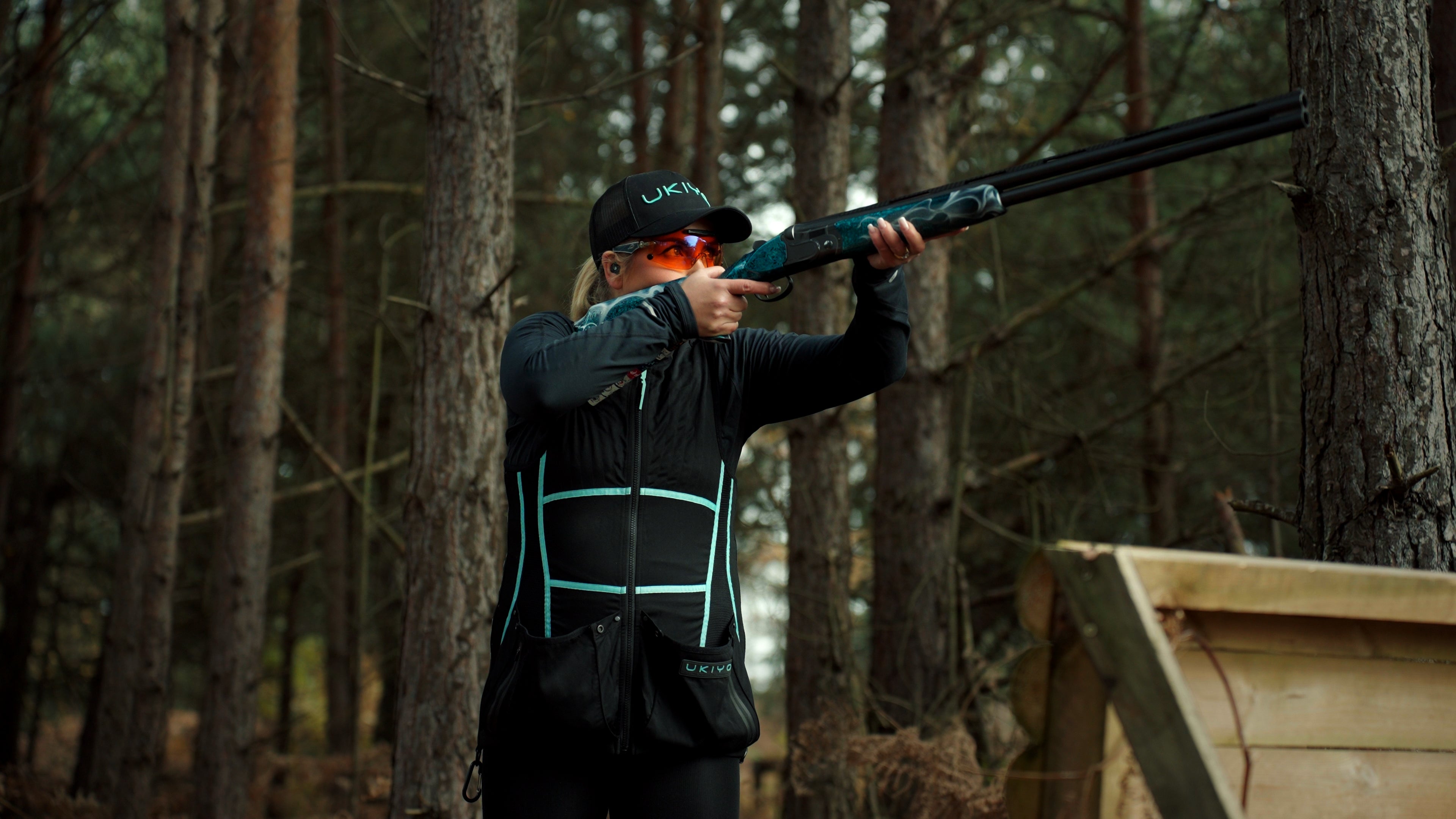
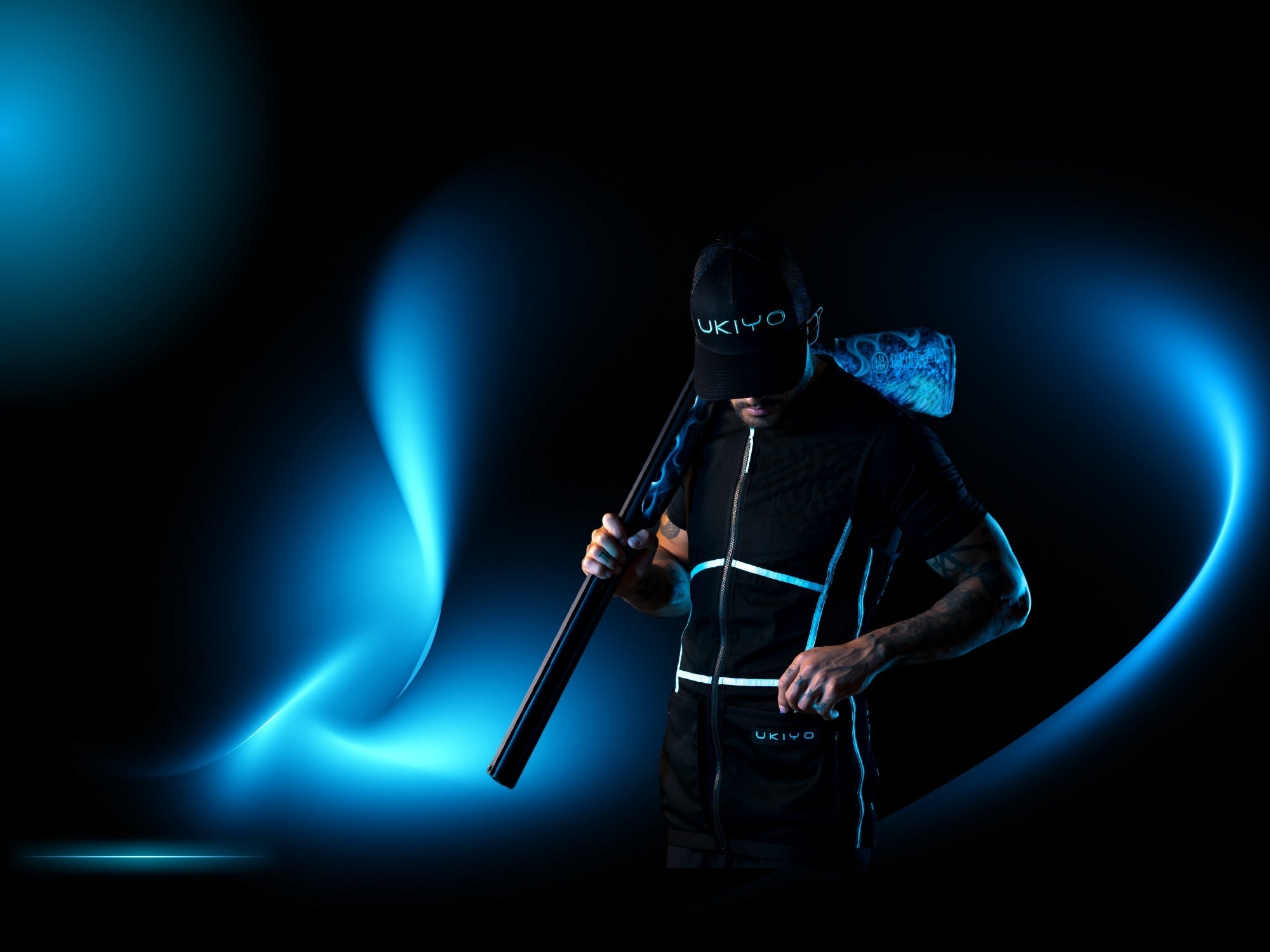
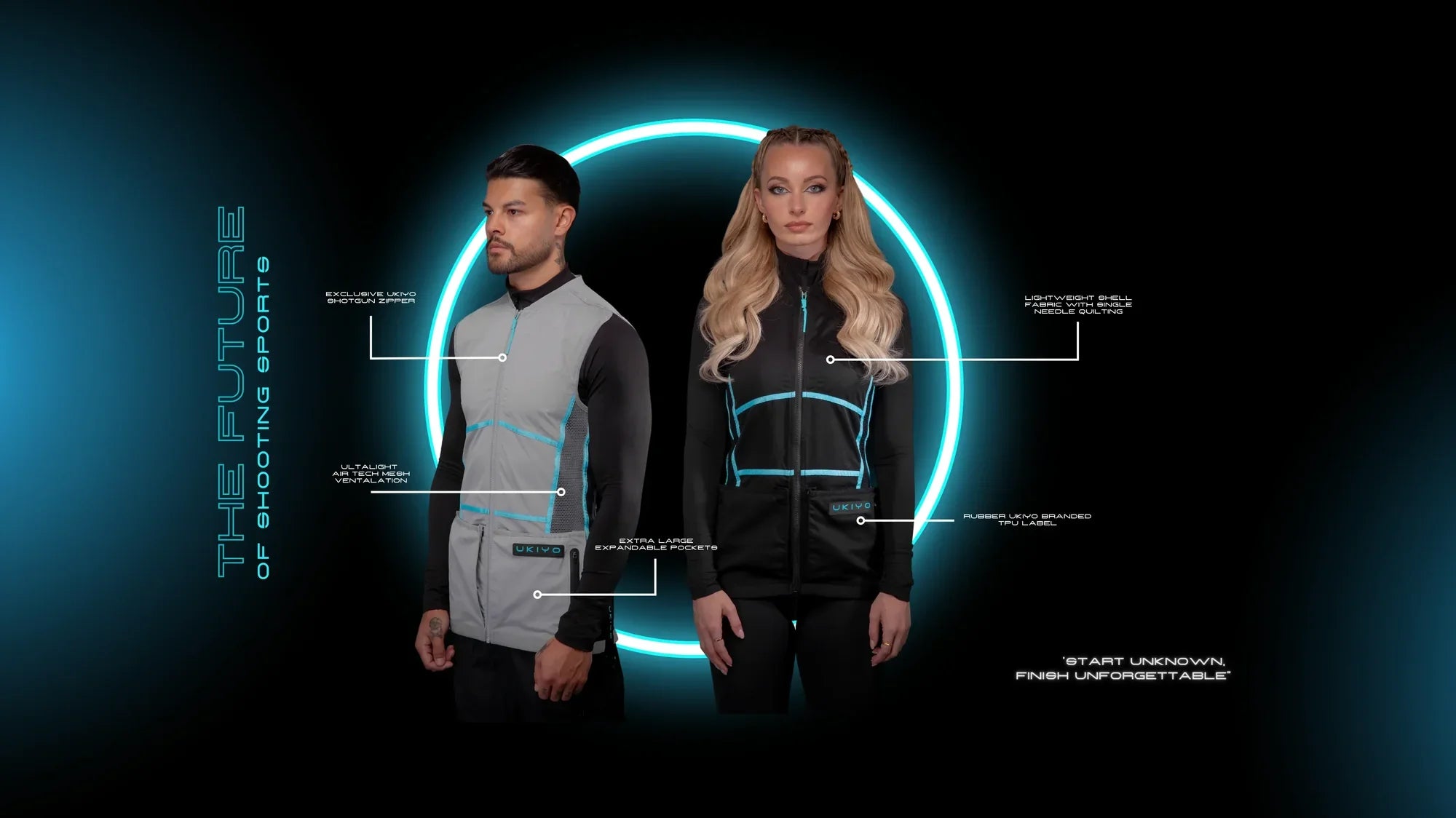
The Ukiyo Inception vest was designed around the requirements covered in this guide. Lightweight, breathable 3D mesh keeps air moving through a full session. Large double-layered pockets hold a meaningful cartridge load without losing shape under weight. Elasticated ribbed side panels give a free, full swing without restriction in either direction. The multi-handed design works for left and right-handed shooters without adjustment, and heavy duty back clips are built to last well beyond the first season.
It is available in the men's range in both black and grey, and in the women's range in both colourways. For sizing before you order, the Ukiyo size guide covers measurements for both ranges.
What is the difference between a shooting vest and a shooting jacket?
Vests are sleeveless and prioritise ventilation and freedom of movement, making them the better choice for warmer conditions and high-volume shooting. Jackets add warmth and weather protection at the cost of some movement range. For a full breakdown of when each is the better option, our guide on shooting vest versus shooting jacket covers the difference in practical terms.
Getting the Right Vest for Your Shooting
Four things determine whether a clay shooting vest actually works: pockets that hold their shape under load, fabric that breathes through a full session, side panels that give a free swing, and construction that does not start failing after a year. Get all four right and the vest disappears into your shooting. Get any of them wrong and you will notice it every time you mount the gun.
Browse the full Inception 001 collection to see both ranges. If you are still working out what you need, our guide on how to choose a shooting vest is worth reading before you commit.