Article: The Types of Clay Pigeon Shooting and What Each One Asks of Your Kit
The Types of Clay Pigeon Shooting and What Each One Asks of Your Kit
Clay pigeon shooting looks, from the outside, like one sport. One gun. One target. Pull. Get closer and it splinters into several disciplines that share almost nothing beyond the clay itself. A round of skeet and a round of sporting clays are both clay pigeon shooting in the same way that a 100m sprint and a cross-country run are both running. The category is the same. The experience is not.
Each discipline places a different physical demand on the shooter and a different set of requirements on the kit. Understanding what those differences are is how you stop making compromises you do not need to make.
Sporting Clays
Sporting, or English Sporting, is the most widely shot clay discipline in the UK. A typical layout takes you through ten to fifteen stands spread across a piece of ground, each presenting different target types, speeds, angles, and distances. Some stands send driven targets overhead at height. Others present crossing birds, quartering targets, rabbits bouncing along the ground, or teal rising almost vertically. FITASC, the international sporting variant, adds further complexity with target sequences that do not repeat between stands and a wider range of combinations from a single peg.
The physical demands are unlike any other clay format. You walk between stands, carry shells, hold your gun across varying terrain in all weathers. The gun mount changes at every stand, and the discipline rewards shooters who can move freely and mount consistently across the full range of angles, not just the ones they practice most.
For a sporting clays shooting vest, the priorities are unrestricted movement across the chest and upper arm, pockets large enough to carry shells between stands, and fabric built for outdoor use. A vest with a restrictive chest panel will cost you shots on crossing birds where the full follow-through matters most. If you want to understand what to look for before you buy, our guide on how to choose a shooting vest that actually fits your shooting covers the key decisions.
Skeet Shooting
Skeet is shot from eight stations arranged in a semicircle between two trap houses, one set high on the left and one low on the right. At each station you call for targets from the high house, the low house, or both as a simultaneous double. The angles and distances are fixed. Unlike sporting, you know exactly what the target will do before it leaves the house.
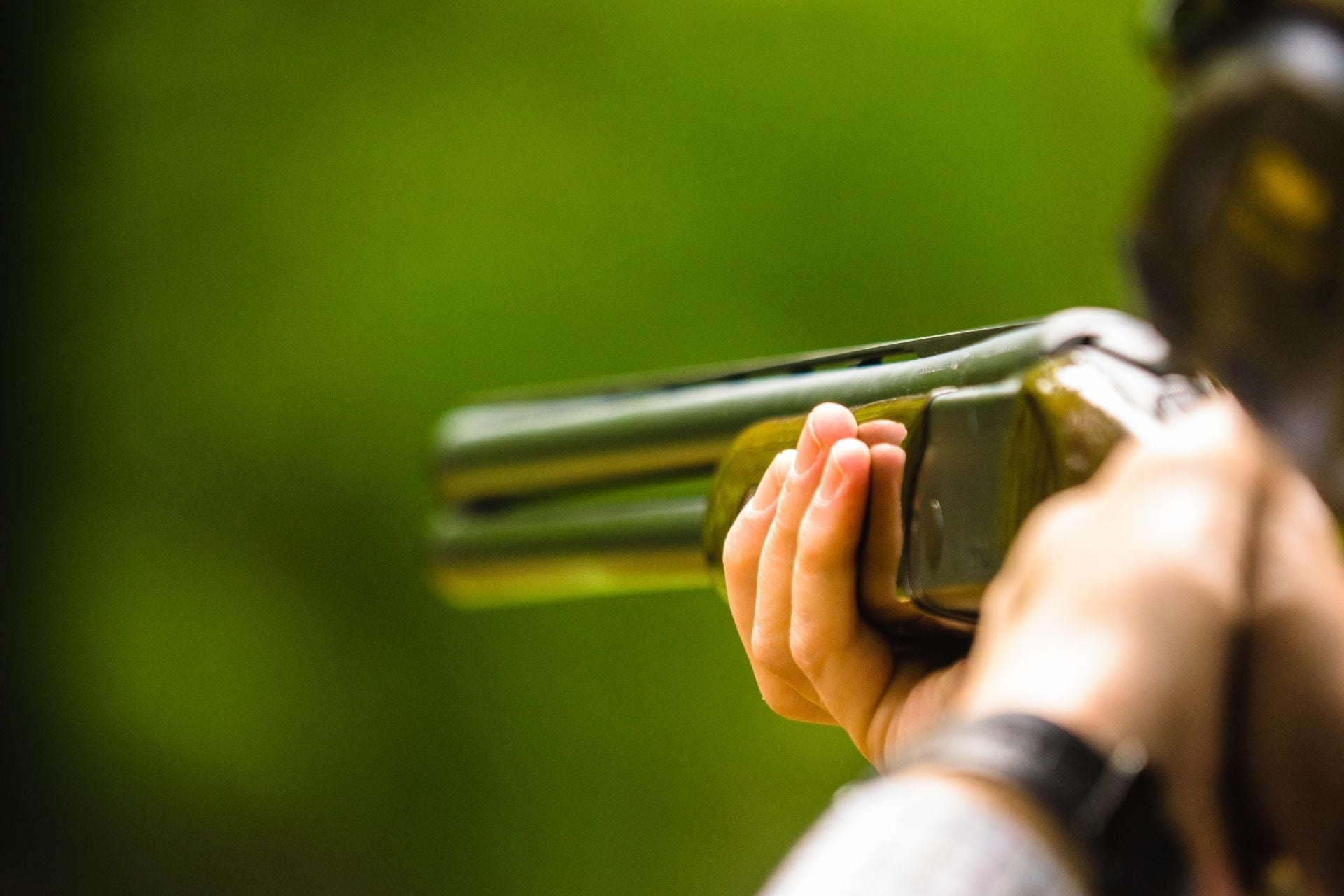
The discipline rewards fast, instinctive shooting. Targets are engaged close and crossing, and the gun mount needs to be smooth, repeatable, and completely unobstructed. The stance is compact relative to sporting, and the gun moves through short, fast arcs between calls. There is no hiding a mount that drags, and a vest that slows it even slightly will show up on the card.
For a skeet shooting vest, the mounting zone is the priority. Any restriction across the chest or upper arm that slows the mount or forces compensation will show in the score. Pocket weight matters less here than in sporting. A lighter vest keeps you sharp across the later stations of a long skeet session when fatigue in the shoulder starts to affect consistency. Our piece on what makes a good clay shooting vest goes into the specific features that separate a vest that performs from one that gets in the way.
Does the type of clay shooting I do affect what vest I need?
Yes. Each discipline puts different demands on kit. Sporting demands durability and freedom of movement across unpredictable angles. Skeet rewards a vest that stays out of the way of a fast, repeatable gun mount. Trap, which we will come to, puts you in a more upright, static stance where shoulder pad position becomes the main variable. Choosing a vest built around one discipline and shooting another is not impossible, but you will notice the compromise.
A vest designed to work across all disciplines removes that variable. The Ukiyo shooting vest range was built with all clay formats in mind, which means it does not ask you to pick one discipline and accept the trade-offs in others.
Trap and Down-the-Line
Trap covers several related formats. Down-the-Line, DTL, is the most common in the UK at club level. Five shooters stand behind a single trap house and rotate after each shot. Targets fly away from you at varying angles within a set spread. Olympic Trap uses three machines buried below ground at each station, throwing targets across a significantly wider angle and at greater speed. DTL teaches you to read a consistent target. Olympic Trap punishes hesitation.
In both trap formats, the stance is more static than sporting. You stand square to the trap house, weight forward, gun pre-mounted or mounted to call. Shoulder pad position on the shooting side becomes more noticeable in trap than in any other discipline, because the gun returns to the same point on every single shot. A pad sitting a centimetre out of place is not a minor irritation after fifty rounds. For a trap shooting vest, the shoulder needs to be exactly right, and nothing across the chest should interfere with the recoil sequence.
What is the most popular type of clay pigeon shooting in the UK?
English Sporting is the most widely shot clay discipline in the UK. It does not require a fixed layout in the way skeet or trap does, which means it can run on almost any suitable piece of ground, and most clubs can offer some version of it regardless of site. DTL is the most common trap format at club level and the entry point for most shooters who want to try a going-away discipline. Olympic formats, including Olympic Skeet and Olympic Trap, are what you will find at international and Commonwealth competition level.
If you are starting out and want to understand where you fit, sporting and DTL are the most accessible. Most county clubs run both.
Can you shoot all types of clay pigeon shooting in the same vest?
If the vest is designed with all disciplines in mind, yes. The problem with most shooting vests is that they are built around one format and make trade-offs in others. A vest prioritising pocket capacity for sporting may feel cumbersome on a skeet layout. One cut close for skeet may not have the durability or the pad placement for regular trap use. A vest that works across sporting, skeet, and trap is built differently from the start, with a chest panel that allows full gun movement and construction that holds up to regular outdoor use across all conditions.
Most shooters try several disciplines before settling on one. The vest they start with will either limit that process or it will not. The Ukiyo shooting vest range is designed so it does not. And if you are thinking about how long a vest bought now should realistically last across regular use, our piece on how long a shooting vest should last is worth reading before you commit.